
Robotic Surgery
Advanced Precision Cancer Surgery with Compassionate Care
Robotic surgery represents a major advancement in the field of modern cancer care—combining cutting-edge technology with surgical expertise to deliver safer, more precise, and less invasive treatment options for patients. At Dr Sourabh Cancer Care, robotic surgery is offered as part of a comprehensive, patient-first oncology program, where technology is used not to replace clinical judgment, but to enhance precision, outcomes, and recovery. For many cancers, surgery remains a critical part of treatment. The goal is not only to remove the tumour effectively but also to preserve surrounding healthy tissues, maintain function, reduce complications, and support faster recovery. Robotic-assisted cancer surgery enables surgeons to achieve these objectives with greater accuracy and control—especially in anatomically complex or delicate areas
What Is Robotic Surgery?
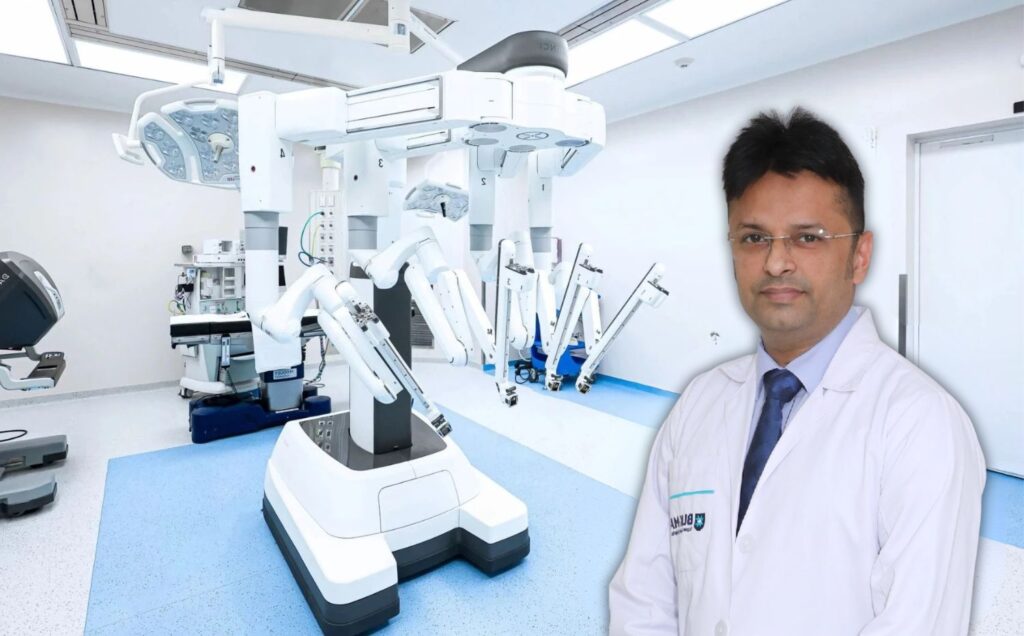
Robotic surgery, also known as robotic-assisted surgery, is a minimally invasive surgical technique in which the surgeon uses a highly advanced robotic system to perform complex procedures with enhanced precision. Contrary to common misconceptions, the robot does not operate independently. Every movement of the robotic instruments is fully controlled by the surgeon.
The robotic system translates the surgeon’s hand movements into extremely fine, precise actions inside the patient’s body. It also provides a magnified, three-dimensional, high-definition view of the surgical field, allowing for meticulous dissection and accurate tumour removal.
Why Robotic Surgery Is Transforming Cancer Care?
Cancer surgery often involves operating near critical structures such as nerves, blood vessels, organs, and vital functional pathways. Traditional open surgery and even standard laparoscopy can have limitations in visibility, access, and instrument
Robotic surgery addresses these challenges by offering: flexibility—particularly in confined or complex anatomical spaces.
For patients, this translates into safer surgery, fewer complications, and a smoother recovery process.
Key Advantages of Robotic Surgery for Cancer Treatment
For patients, this translates into safer surgery, fewer complications, and a smoother recovery process.
Key Advantages of Robotic Surgery for Cancer Treatment
1. Enhanced Surgical Precision
2. Superior Visualisation
3. Minimally Invasive Approach
4. Reduced Blood Loss and Pain
5. Faster Recovery and Shorter Hospital Stay
6. Improved Functional Outcomes
Cancers That May Benefit from Robotic Surgery
Robotic surgery can be considered for a wide range of cancers, depending on tumour type, stage, location, and patient health status. At Dr Sourabh Cancer Care, robotic surgery is integrated into a personalised treatment plan after careful evaluation.
Common applications include:
Head and Neck Cancers : Robotic surgery allows access to difficult-to-reach areas of the throat, tongue base, and oropharynx while minimising damage to surrounding tissues. This can help preserve speech and swallowing functions.
Gastrointestinal Cancers: Cancers of the oesophagus, stomach, colon, and rectum may benefit from robotic precision, especially when operating in confined spaces within the abdomen or pelvis.
Gynecological and Pelvic Cancers : Robotic surgery offers advantages in pelvic anatomy where space is limited and precision is critical to preserve organs and nerve function.
Selected Soft Tissue and Complex Tumours: Robotic assistance may be used for tumours requiring meticulous dissection near vital structures.
Suitability for robotic surgery is always determined on an individual basis following detailed clinical assessment.
Patient-Centric Approach to Robotic Cancer Surgery
Robotic technology is a powerful tool, but successful cancer surgery depends on more than technology alone. At Dr Sourabh Cancer Care, every patient undergoes a thorough evaluation process to determine the most appropriate surgical approach.
This includes:
- Detailed clinical examination
- Review of imaging studies (CT, MRI, PET scans)
- Tumour staging and pathology review
- Multidisciplinary discussion when required
The decision to proceed with robotic surgery is based on what is safest and most beneficial for the patient—not on routine or convenience.
Safety and Oncological Principles
A key concern for patients considering robotic surgery is safety and cancer control. Robotic surgery follows the same strict oncological principles as open surgery, including:
- Complete tumour removal with clear margins
- Appropriate lymph node assessment when indicated
- Adherence to evidence-based cancer surgery guidelines
Robotic assistance enhances the surgeon’s ability to achieve these goals while minimising collateral
tissue damage.
What Patients Can Expect Before Surgery
Before robotic cancer surgery, patients receive comprehensive preoperative counselling and preparation, including:
- Explanation of the surgical plan
- Discussion of benefits, risks, and alternatives
- Pre-anaesthesia assessment
- Nutritional and fitness optimisation where required
Clear communication ensures that patients and families are well informed and confident about the treatment journey.
Recovery After Robotic Cancer Surgery
Recovery following robotic surgery is generally smoother compared to open surgery, though individual experiences may vary.Typical recovery benefits include:
- Smaller scars
- Reduced postoperative discomfort
- Earlier oral intake (where applicable)
- Faster return to daily activities
- Lower risk of wound-related complications
Postoperative care is closely monitored, and patients receive guidance on diet, activity, wound care, and follow-up.
Integration with Comprehensive Cancer Care
Robotic surgery is often one part of a broader cancer treatment plan. Depending on the cancer type
and stage, patients may also require:
- Chemotherapy
- Radiation therapy
- Targeted or immunotherapy
- Rehabilitation and nutritional support
Care is coordinated to ensure seamless integration between surgical and non-surgical treatments, always prioritising patient well-being.
Addressing Common Patient Questions
Is robotic surgery suitable for all cancer patients?
Is robotic surgery safe?
Does robotic surgery increase cancer cure rates?
Will robotic surgery delay other treatments?
Commitment to Ethical, Evidence-Based Care
At Dr Sourabh Cancer Care, the use of robotic surgery is guided by medical evidence, clinical expertise, and ethical responsibility. Technology is chosen because it benefits the patient—not because it is new or fashionable.
Every treatment decision is made with transparency, empathy, and respect for patient values.
Robotic Surgery in Delhi NCR: A Trusted Option for Modern Cancer Care
As cancer care continues to evolve, robotic surgery stands as an important advancement—offering precision, safety, and improved quality of life for selected patients. When combined with experienced surgical judgment and compassionate care, it becomes a powerful tool in the fight against cancer
Patients seeking advanced, minimally invasive cancer surgery in Delhi NCR can explore robotic surgery as part of a carefully personalised treatment plan under the guidance of Dr Sourabh Mukharjee
Book a Consultation : +91 – 93107 62914