
Gynecological Cancers: Symptoms, Causes, Diagnosis, and Advanced Surgical Treatment
By Dr. Sourabh Mukharjee
Best Oncologist in Noida | Expert in Surgical Oncology
Introduction
Gynecological cancers are a group of malignancies that originate in the female reproductive system. These cancers can affect women across different age groups and often present with subtle or misunderstood symptoms in their early stages. When detected early and treated by an experienced oncology team, many gynecological cancers are highly treatable with excellent long-term outcomes.
In India, the burden of gynecological cancers—particularly cervical and ovarian cancers—remains significant. Delayed diagnosis due to lack of awareness, social hesitation, and under-reporting of symptoms continues to impact survival rates. In regions like Delhi NCR and Noida, increasing awareness, routine screening, and access to advanced surgical oncology have begun to improve outcomes.
This comprehensive guide explains gynecological cancers, their types, symptoms, risk factors, diagnosis, staging, and modern treatment approaches, with a strong focus on the role of advanced surgical oncology in providing curative and life-enhancing care.
What Are Gynecological Cancers?
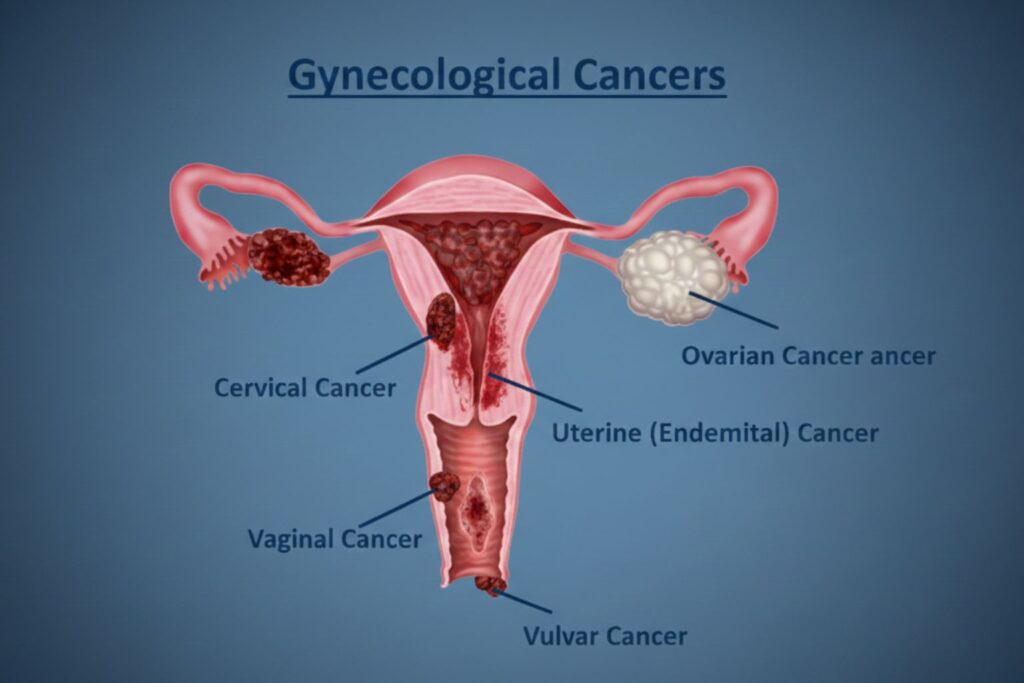
Gynecological cancers develop in the organs of the female reproductive system. These include the cervix, uterus, ovaries, fallopian tubes, vagina, and vulva. Each cancer type has unique risk factors, symptoms, and treatment strategies.
Gynecological cancers are broadly categorized based on the organ of origin:
- Cervical cancer
- Ovarian cancer
- Uterine (endometrial) cancer
- Vulvar cancer
- Vaginal cancer
Understanding the differences among these cancers is crucial for early detection and individualized treatment planning.
Major Types of Gynecological Cancers
- Cervical Cancer: Cervical cancer develops in the cervix—the lower part of the uterus that connects to the vagina. It is one of the most preventable gynecological cancers due to effective screening and vaccination.
Key risk factors include:
- Persistent infection with Human Papillomavirus (HPV)
- Early sexual activity or multiple sexual partners
- Smoking
- Weakened immune system
- Lack of regular Pap smear screening
- When detected early, cervical cancer has a very high cure rate.
- Ovarian Cancer : Ovarian cancer arises from the ovaries or fallopian tubes and is often referred to as a “silent cancer” because early symptoms are vague and nonspecific.
Common risk factors include:
- Family history of ovarian or breast cancer
- Genetic mutations (e.g., BRCA1/BRCA2)
- Increasing age
- Endometriosis
- Late menopause or nulliparity
- Due to delayed diagnosis, ovarian cancer often requires complex surgical and medical treatment.
- Uterine (Endometrial) Cancer: Endometrial cancer originates in the lining of the uterus and is the most common gynecological cancer in post-menopausal women.
Risk factors include:
- Obesity
- Diabetes and hypertension
- Prolonged estrogen exposure
- Early menarche or late menopause
- Polycystic ovarian syndrome (PCOS)
- Abnormal uterine bleeding is often an early warning sign, allowing timely diagnosis.
- Vulvar Cancer: Vulvar cancer affects the external genital organs and is more commonly seen in older women.
Risk factors include:
- HPV infection
- Chronic vulvar skin conditions
- Smoking
- Weakened immunity
- Early lesions may present as itching, lumps, or skin color changes.
Vaginal Cancer: Vaginal cancer is rare and often associated with prior cervical cancer or HPV infection. Symptoms may include vaginal bleeding, discharge, or pain, especially in advanced stages.
Common Symptoms of Gynecological Cancers
Many gynecological cancers share overlapping symptoms. Awareness of these signs is critical for early medical consultation.
Warning Signs That Should Not Be Ignored:
- Abnormal vaginal bleeding (especially after menopause)
- Bleeding between periods or after intercourse
- Persistent pelvic or lower abdominal pain
- Bloating or increase in abdominal size
- Difficulty eating or early fullness
- Unexplained weight loss
- Persistent vaginal discharge
- Pain during intercourse
- Changes in bowel or bladder habits
- Any persistent or unusual gynecological symptom warrants evaluation by a specialist.
- Causes and Risk Factors
- Gynecological cancers develop due to genetic, hormonal, environmental, and lifestyle factors.
Common Contributing Factors:
- HPV infection
- Hormonal imbalance
- Genetic mutations
- Obesity and sedentary lifestyle
- Smoking and alcohol consumption
- Delayed childbearing
- Poor access to routine screening
While not all cancers can be prevented, many risk factors are modifiable through lifestyle changes and regular health check-ups.
Diagnosis of Gynecological Cancers
Accurate diagnosis and staging are the foundation of effective treatment.
Diagnostic Tools Include:
- Clinical Examination: A detailed pelvic examination helps identify visible or palpable abnormalities.
- Pap Smear and HPV Testing: Essential for cervical cancer screening and early detection.
- Ultrasound (Pelvic and Transvaginal): Helps evaluate uterine and ovarian abnormalities.
- Biopsy: Histopathological examination confirms cancer type and grade.
- CT Scan / MRI: Used to assess tumor extent and involvement of surrounding organs.
- PET-CT Scan: Provides whole-body staging and detects distant metastasis.
- Tumor Markers: Markers such as CA-125 may support diagnosis and treatment monitoring in ovarian cancer.
Staging of Gynecological Cancers
Staging describes how far cancer has spread and guides treatment planning.
Stages generally range from:
- Stage I: Cancer confined to the organ of origin
- Stage II: Spread to nearby structures
- Stage III: Regional lymph node involvement
- Stage IV: Distant organ spread
Precise staging allows for tailored, evidence-based treatment strategies.
Treatment of Gynecological Cancers
Treatment depends on cancer type, stage, patient age, overall health, and fertility considerations. A multidisciplinary approach is essential for optimal outcomes.
Role of Surgery in Gynecological Cancers
Surgery is the cornerstone of treatment for many gynecological cancers, particularly in early and locally advanced stages.
Surgical goals include:
- Complete removal of the tumor
- Accurate staging
- Preservation of organ function where possible
- Common surgical procedures include:
- Hysterectomy
- Oophorectomy
- Lymph node dissection
- Cytoreductive (debulking) surgery for ovarian cancer
Advances in surgical oncology now allow minimally invasive and precision-based techniques, reducing complications and recovery time.
Chemotherapy
Chemotherapy is often used:
- After surgery to eliminate microscopic disease
- Before surgery to shrink tumors
- As primary treatment in advanced cases
- Modern chemotherapy protocols are increasingly personalized to improve effectiveness and reduce side effects.
Radiation Therapy
Radiation therapy plays an important role in:
- Cervical cancer
- Select uterine and vaginal cancers
- Symptom control in advanced disease
- It may be delivered externally or internally (brachytherapy).
- Targeted Therapy and Immunotherapy
In selected patients, advanced therapies such as:
- Targeted molecular agents
- Immunotherapy
- are used based on tumor biology and genetic profiling, particularly in recurrent or advanced cancers.
- Fertility Preservation and Quality of Life
For younger women, fertility preservation is an important consideration. When appropriate, treatment strategies may be modified to:
- Preserve ovaries or uterus
- Minimize long-term hormonal impact
- Equally important is quality-of-life-focused care, including
- Pain management
- Nutritional support
- Psychological counseling
- Sexual health and rehabilitation support
- Life After Gynecological Cancer Treatment
- Survivorship care is a vital part of the cancer journey.
- Long-term follow-up focuses on:
- Early detection of recurrence
- Management of treatment-related effects
- Hormonal and metabolic health
- Emotional and mental well-being
- With expert care and regular monitoring, many women lead healthy, active lives after treatment.
Importance of Expertise in Gynecological Cancer Surgery
Gynecological cancer surgery requires:
- Deep anatomical knowledge
- Oncologic precision
- Experience in managing complex cases
- Multidisciplinary coordination
Dr. Sourabh Mukharjee, widely regarded as the Best Oncologist in Noida, is a distinguished expert in Surgical Oncology in India. He is known for his meticulous surgical technique, adoption of advanced treatment protocols, and a deeply compassionate, patient-centric approach.
His philosophy emphasizes individualized care, where every patient’s medical condition, emotional well-being, and long-term quality of life are given equal importance.
Conclusion
Gynecological cancers, though complex, are increasingly manageable with early detection, accurate diagnosis, and expert multidisciplinary treatment. Awareness of symptoms, routine screening, and timely consultation with an experienced surgical oncologist can significantly improve outcomes.
Women should feel empowered to seek medical advice for any persistent gynecological symptoms—early action can be life-saving.