
Esophageal Cancer: Symptoms, Causes, Diagnosis, and Advanced Surgical Treatment
By Dr. Sourabh Mukharjee
Best Oncologist in Noida | Expert in Surgical Oncology
Introduction
Esophageal cancer is a serious and potentially life-threatening condition that affects the esophagus—the muscular tube responsible for carrying food and liquids from the mouth to the stomach. Although not as common as some other cancers, esophageal cancer is often diagnosed at an advanced stage due to its subtle early symptoms. As a result, timely awareness, early diagnosis, and expert multidisciplinary care are crucial for improving outcomes.
In India, the incidence of esophageal cancer has been steadily increasing, particularly in urban and semi-urban regions such as Delhi NCR. Lifestyle factors, dietary habits, tobacco and alcohol use, and underlying medical conditions all contribute to this rising burden.
This comprehensive guide aims to help patients and caregivers understand esophageal cancer, including its causes, symptoms, diagnostic approach, staging, and modern treatment options—with a special focus on the role of advanced surgical oncology in achieving long-term disease control and improved quality of life.
Understanding the Esophagus and Esophageal Cancer
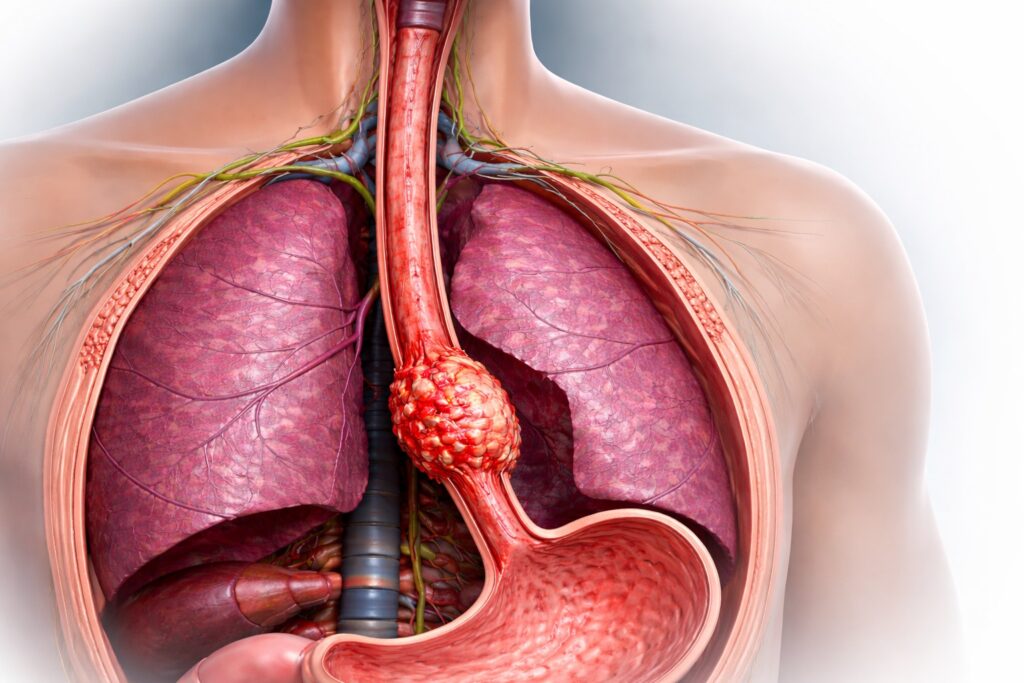
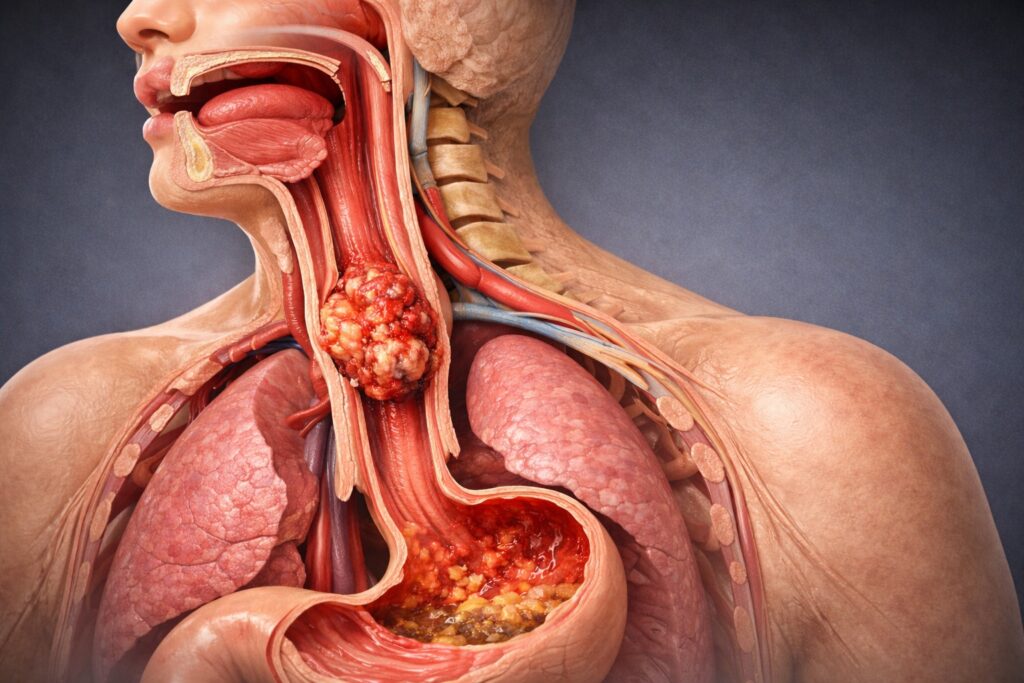
The esophagus is a hollow, muscular organ approximately 25 cm long that connects the throat (pharynx) to the stomach. Its primary function is to transport food through coordinated muscular contractions known as peristalsis.
Esophageal cancer develops when abnormal cells in the lining of the esophagus begin to grow uncontrollably. Over time, these cells can invade deeper layers of the esophageal wall and spread to nearby lymph nodes or distant organs.
Types of Esophageal Cancer
There are two main histological types of esophageal cancer:
- Squamous Cell Carcinoma (SCC)
- Arises from the squamous cells lining the upper and middle portions of the esophagus
- Historically the most common type in India
- Strongly associated with tobacco use, alcohol consumption, and poor nutritional status
- Adenocarcinoma
- Develops from glandular cells, usually in the lower esophagus near the stomach
- Increasingly common due to rising rates of acid reflux and obesity
- Often associated with Barrett’s esophagus
- Understanding the type of esophageal cancer is essential, as it influences treatment planning and prognosis.
Risk Factors for Esophageal Cancer
Several factors increase the risk of developing esophageal cancer:
- Tobacco use (smoking or chewing)
- Excessive alcohol consumption
- Chronic acid reflux (GERD)
- Barrett’s esophagus
- Obesity
- Poor dietary intake, especially low consumption of fruits and vegetables
- Very hot beverages consumed regularly
- Achalasia and other esophageal motility disorders
- Previous radiation exposure to the chest
- Family history of esophageal or gastrointestinal cancers
- Reducing modifiable risk factors can play an important role in prevention.
- Early and Advanced Symptoms of Esophageal Cancer
- One of the major challenges with esophageal cancer is that early symptoms are often mild or overlooked.
Early Symptoms
- Difficulty swallowing (dysphagia), initially with solid foods
- Sensation of food getting stuck in the chest
- Mild chest discomfort or heartburn
- Unintentional weight loss
- Loss of appetite
- Advanced Symptoms
- Progressive difficulty swallowing liquids
- Persistent chest pain or pressure
- Hoarseness of voice
- Chronic cough or choking episodes
- Vomiting blood or black stools
- Severe weight loss and fatigue
- Any persistent swallowing difficulty or unexplained weight loss should prompt immediate medical evaluation.
How Esophageal Cancer Is Diagnosed
Accurate diagnosis and staging are critical for selecting the most effective treatment strategy.
Diagnostic Investigations Include:
- Upper GI Endoscopy :A flexible endoscope is used to visualize the esophagus and obtain biopsy samples from suspicious lesions.
- Biopsy and Histopathology: Confirms the diagnosis and identifies the cancer type.
- Endoscopic Ultrasound (EUS): Assesses tumor depth and nearby lymph node involvement.
- CT Scan (Chest & Abdomen): Evaluates local spread and distant metastasis.
- PET-CT Scan: Provides detailed whole-body staging and helps detect occult disease.
- Bronchoscopy (in select cases): Used when airway involvement is suspected.
Staging of Esophageal Cancer
Esophageal cancer is staged using the TNM system:
T (Tumor): Depth of invasion into the esophageal wall
N (Nodes): Spread to regional lymph nodes
M (Metastasis): Spread to distant organs
Stages range from Stage I (early disease) to Stage IV (advanced metastatic disease). Accurate staging allows personalized, evidence-based treatment planning.
Treatment Options for Esophageal Cancer
Treatment depends on the stage, tumor type, location, and patient’s overall health. A multidisciplinary approach involving surgical oncology, medical oncology, radiation oncology, gastroenterology, nutrition, and rehabilitation is essential.
- Surgery (Cornerstone of Curative Treatment)
For localized and locally advanced esophageal cancer, surgery plays a central role.
Esophagectomy involves removal of the cancerous portion of the esophagus along with surrounding lymph nodes, followed by reconstruction to restore digestive continuity.
Modern surgical approaches include:
- Open esophagectomy
- Minimally invasive esophagectomy (MIE)
- Hybrid techniques combining open and laparoscopic methods
- Advances in surgical techniques have significantly reduced complications and improved recovery.
- Chemotherapy
- Chemotherapy may be used:
- Before surgery (neoadjuvant) to shrink the tumor
- After surgery (adjuvant) to reduce recurrence risk
- As primary treatment in advanced or inoperable cases
- Radiation Therapy
- Radiation is often combined with chemotherapy (chemoradiation) to:
- Improve surgical outcomes
- Treat inoperable tumors
- Provide symptom relief in advanced disease
- Targeted Therapy and Immunotherapy
In selected patients, newer treatments such as:
- HER2-targeted therapy
- Immune checkpoint inhibitors
- may be used based on molecular profiling of the tumor.
- Importance of Nutritional and Supportive Care
Patients with esophageal cancer often face nutritional challenges due to swallowing difficulties. Early nutritional intervention is essential and may include:
Diet modification
- Enteral feeding (feeding tubes) when required
- Swallowing rehabilitation
- Pain management and symptom control
- Holistic care significantly improves treatment tolerance and quality of life.
Life After Esophageal Cancer Treatment
Recovery after esophageal cancer treatment is gradual and requires long-term follow-up.
Key aspects include:
Nutritional counseling
Monitoring for recurrence
Management of reflux or swallowing issues
Psychological and emotional support
With expert care and structured follow-up, many patients return to active, meaningful lives.
Why Expertise Matters in Esophageal Cancer Surgery
Esophageal cancer surgery is among the most complex procedures in oncologic surgery. Outcomes depend heavily on:
Surgeon experience
Institutional infrastructure
Multidisciplinary coordination
Dr. Sourabh Mukharjee, widely regarded as the Best Oncologist in Noida, is a distinguished expert in Surgical Oncology, known for his precision-driven techniques, evidence-based decision-making, and compassionate, patient-first philosophy.
His approach focuses not only on removing cancer but also on preserving function, minimizing complications, and supporting patients throughout their cancer journey—from diagnosis to recovery and beyond.
Conclusion
Esophageal cancer is a challenging disease, but early detection, accurate staging, and expert multidisciplinary treatment can significantly improve survival and quality of life. Awareness of symptoms, timely medical evaluation, and access to specialized surgical oncology care are key pillars of successful treatment.
If you or a loved one is experiencing persistent swallowing difficulty, unexplained weight loss, or other concerning symptoms, seeking early consultation with an experienced oncologist can make a life-changing difference